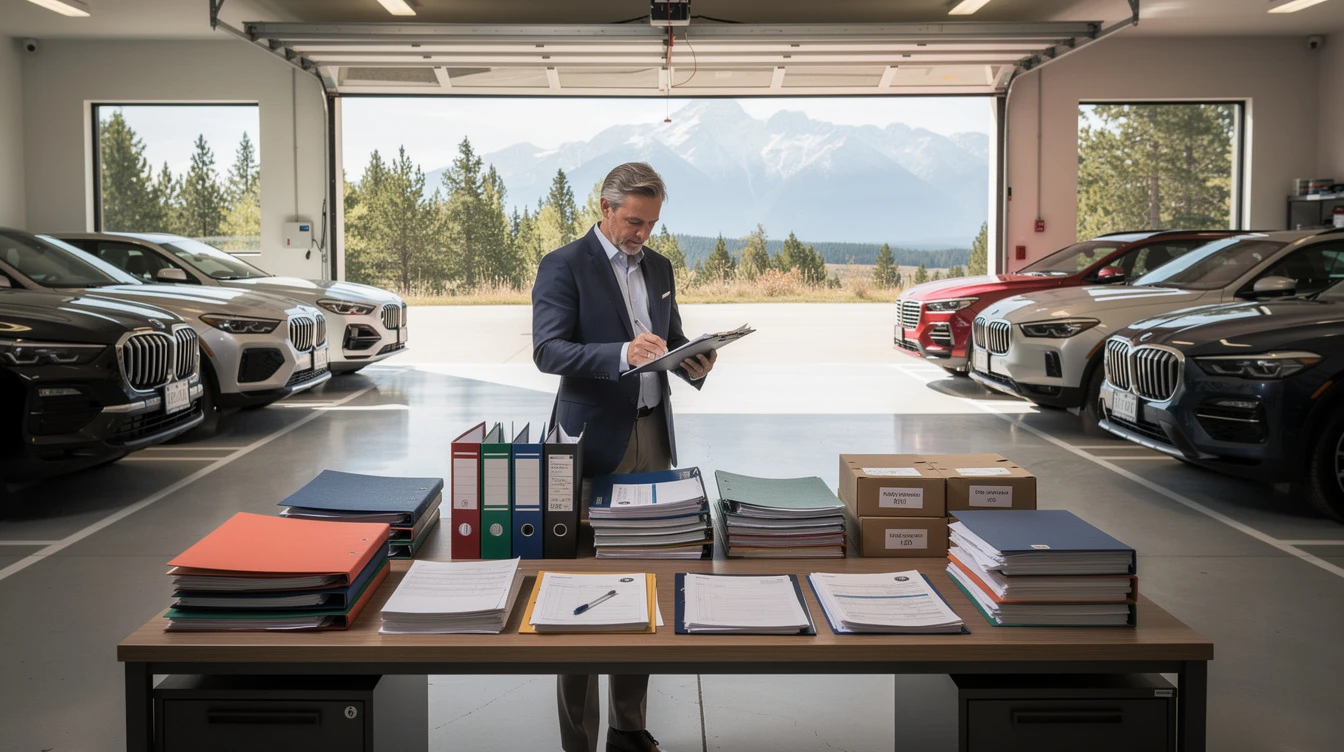
You've spent years building something worth admiring. Five cars, maybe eight, maybe more. Each one registered in your home state, each one with its own renewal date, its own stack of paperwork, its own bill. Somewhere in the garage there's a folder, probably two, stuffed with titles and insurance cards and lapsed registration notices you meant to deal with last month.
Collector car registration doesn't have to work that way. When you run your vehicle collection through a single Montana LLC, every vehicle you own lives under one legal roof. One entity, one renewal cycle you can actually plan around, and a registration structure that scales as your collection grows.
This isn't a system built for casual owners with two vehicles and a parking spot. It's for the person whose garage is a serious asset, and who wants their paperwork to reflect that.
Why Five-Plus Cars Break the Standard System
Most state registration systems were built for households with one or two vehicles. They charge sales tax at purchase, require emissions testing on a per-vehicle schedule, and mail renewal notices to whatever address is on file, which becomes a problem the moment you move, add a vehicle, or let anything slip through the cracks.
When your vehicle collection grows past four or five cars, the administrative load compounds fast. You're tracking renewal deadlines across multiple months, paying property taxes on each vehicle separately in many states, and potentially writing a large check in sales tax every time you acquire something new. For a collector who turns over inventory or adds a car every season, that exposure adds up quickly.
Montana has no sales tax. That's not a technicality, it's confirmed by the Montana Department of Revenue and it applies to vehicles registered through a properly formed Montana LLC. There are no emissions requirements for most vehicles registered in the state, and registration fees are based on vehicle age, meaning older collector cars often carry very modest annual costs. You can review the official Montana vehicle title and registration fee schedule to see where your vehicles would land.
For a deeper look at how Montana compares to your home state for a collection like yours, the post Montana Vehicle Registration vs. Your Home State: Considerations for Professional Vehicle Portfolios walks through the comparison with specific examples.
See which Montana package fits your collectionHow One LLC Holds Your Entire Vehicle Collection
Here's how the structure works in practice. You form a Montana LLC, a straightforward process through the Montana Secretary of State. That LLC becomes the titled owner of each vehicle in your collection. Every car, truck, motorcycle, or trailer you want to include gets titled and registered under that single entity.
Ready to register your vehicle?
Join thousands of vehicle owners who use Montana Registration Services to handle their registration quickly and legally.
Find My Montana Package → →From that point forward, your collection has a single legal address in Montana, a single registered agent, and a single annual report filing due each April 15. Instead of juggling individual renewal notices scattered across your calendar, you work from one organized file. MRS handles the state-side paperwork, title submissions, registration processing, renewal coordination, so your involvement stays at the decision-making level, not the DMV counter.
The LLC structure also insulates your personal assets. Vehicles held in an LLC are business property, which creates a separation between your collection and your personal balance sheet. That matters when you're holding high-value cars. The Vehicle LLC page covers this in detail, and the Vehicle LLC FAQs address the most common questions collectors ask before getting started.
If your collection includes motorcycles, the same LLC structure applies, though motorcycle-specific registration considerations are worth reviewing separately through a resource like the tips for safely rolling a motorcycle into a garage guide, which touches on storage and ownership considerations for two-wheel collectors.
What This Looks Like for a Real Collection
Consider a collector with eight vehicles: two classic American muscle cars from the 1960s, a modern European exotic, a diesel pickup used for towing, a travel trailer, and three motorcycles. In their home state of California, each vehicle carries its own registration calendar, emissions requirement, and property tax bill. The exotic alone triggered nearly $40,000 in sales tax at purchase.
Moving that collection under a Montana LLC means the LLC, not the individual, is the buyer of record for future acquisitions. Sales tax on the next purchase: zero. Emissions testing for the classics: not required in Montana. Registration fees on the 1960s vehicles: minimal, because Montana fees are age-weighted and older vehicles land in lower fee brackets.
Same-day registrations, Montana LLC formation, and title submissions in as little as 8 days — handled entirely by our team, fully remote.
Get a Free QuoteMRS processes exotics registration and handles standard auto registration under the same account structure. Whether you're adding a trailer or titling a seven-figure supercar, the workflow is the same. For context on why high-value vehicle owners in particular favor this approach, Why Are Supercars Registered in Montana? covers the reasoning in plain terms.
"We processed eight vehicles under one LLC for a collector in Texas, titles submitted within eight days of receiving documents, registrations handled remotely, no DMV visits required. That's a normal week for us."
, Montana Registration Services processing team
That kind of turnaround matters when you're acquiring vehicles at auction or across state lines. MRS submits titles within eight days of receiving completed documents, compared to a six-week industry norm. For collections that are actively growing, that speed is the difference between clean paperwork and a backlog.
Vehicles the LLC Can Hold
| Vehicle Type | Montana LLC Eligible? | Notes |
|---|---|---|
| Classic / Collector Cars | Yes | Low age-based registration fees |
| Exotic / High-Value Vehicles | Yes | No sales tax on purchase through LLC |
| Motorcycles | Yes | Same LLC, same renewal structure |
| RVs and Motorhomes | Yes | See RV Registration |
| Trailers | Yes | Cargo and travel trailers both eligible |
| Boats / Watercraft | Yes | See Watercraft Registration |
Keeping the LLC in Good Standing
A Montana LLC requires an annual report filed with the Secretary of State, due April 15 each year. MRS provides registered agent services to keep your LLC's address current and your compliance calendar clear. If you're adding vehicles over time, each new title gets processed under the existing LLC, no new entity needed, no new setup fees for the structure itself.
Insuring vehicles held in an LLC is a common question, and the answer varies by insurer. The Insuring Your Vehicle page covers what collectors typically need to know before placing a policy on an LLC-titled vehicle. Title transfers into and out of the LLC follow standard Montana procedures, outlined at Titling Your Vehicle.
If you're managing a larger portfolio that functions more like a commercial fleet, MRS also works directly with dealerships and fleet operators on bulk registration agreements. The infrastructure is the same, it just scales to match your volume.
Your Collection Deserves a Real System
A garage full of well-maintained vehicles is a serious investment. The paperwork behind it should be just as organized as the cars themselves. A Montana LLC gives your vehicle collection a permanent, consistent registration home, one that doesn't require you to chase renewal notices, calculate sales tax on every acquisition, or visit a DMV counter to make something happen.
MRS handles the Montana side of the process with a 99%+ accuracy rate across thousands of title submissions. You send documents, we handle filing, you receive your plates and titles. Whether you're registering your first vehicle under a new LLC or bringing an existing collection of twelve into one structure, the process is the same, and it starts with a single conversation.
Find your Montana registration packageFrequently Asked Questions
Can I add vehicles to my Montana LLC after it's already formed?
Yes. You can title and register additional vehicles under your existing LLC at any time. Each new vehicle follows the standard title submission process through MRS, no new LLC formation required. This is one of the main advantages of the structure for growing collections.
Do I need to be a Montana resident to form a Montana LLC?
No. Montana allows non-residents to form and maintain an LLC in the state. You'll need a Montana registered agent to maintain a state address, which MRS provides as part of its services. Out-of-state collectors use this structure regularly. See How to Register a Vehicle in Montana Without Being a Resident for the full process.
How does collector car registration work for vehicles over 30 years old?
Montana uses an age-based fee schedule, and vehicles over a certain age Eligible for lower annual registration fees. Many classic and antique vehicles held by collectors land in Montana's most favorable fee brackets. Check the official Montana fee schedule for current rates by vehicle age.
What documents does MRS need to title a vehicle under my LLC?
Typically you'll need the existing title (or manufacturer's certificate of origin for new vehicles), a bill of sale, and your LLC formation documents. MRS reviews your paperwork before submission and flags any issues before filing. Specifics vary by vehicle type and transaction history.
Does the LLC protect my personal assets if a vehicle is involved in an incident?
An LLC creates a legal separation between the entity and its members, which can provide personal liability protection. This is a meaningful reason collectors use the structure for high-value vehicles. Consult a licensed attorney for guidance specific to your situation, as asset protection depends on how the LLC is maintained.
Can I register a mix of vehicle types, such as cars, motorcycles, and a boat, under one LLC?
Yes. A Montana LLC can hold passenger vehicles, motorcycles, RVs, trailers, and watercraft. MRS handles registration for all of these vehicle types. The LLC serves as the unified owner of record for each, and renewals are managed under the same account structure.