

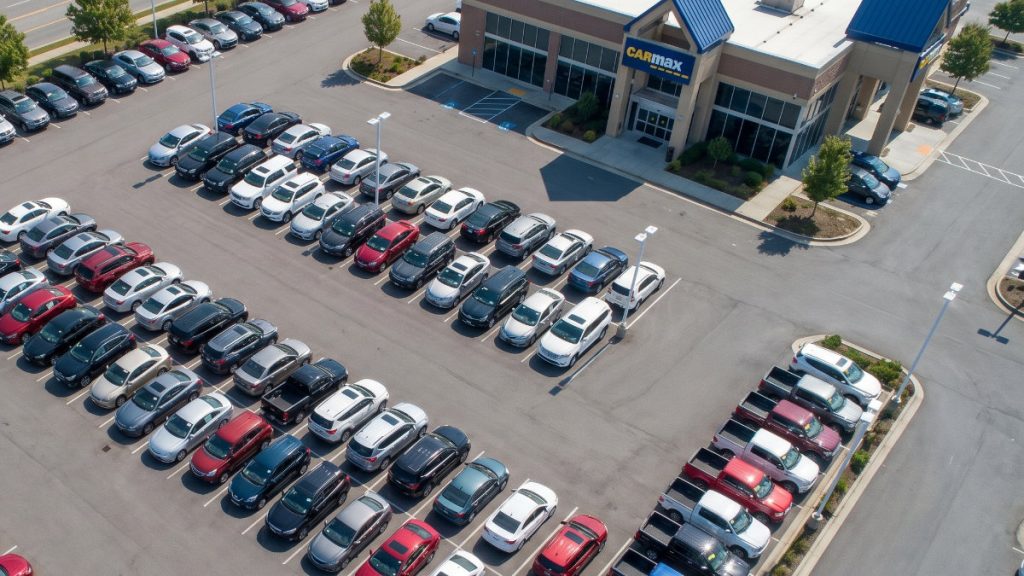
You bought the car. The customer is ready. The financing is done. And then you wait, because the title is somewhere in a stack of paperwork at a state agency that runs on its own schedule. That vehicle sits on your lot, eating floor plan interest by the day, while the deal technically already happened.
This is a cost most dealerships absorb without tracking it. A vehicle that should have turned in eight days stays for three weeks. Multiply that across a dozen transactions a month, and you are looking at real money left on the table, not in fees, but in the floor plan drag that compounds when registration speed slows down.
Inventory velocity, the rate at which vehicles move from acquisition to delivered customer, is one of the most direct levers a dealer has on profitability. Title turnaround is a major variable in that equation, and most dealers treat it as something that just happens rather than something they can control.
Idle Vehicles Are Not Neutral, They Are Expensive
Floor plan financing charges interest daily. A vehicle sitting on your lot waiting for a title or registration paperwork to clear is not a neutral asset. It is a depreciating one that is costing you money while it waits. At an average floor plan rate, a vehicle sitting for an extra ten days can cost $50 to $200, depending on its value. Across a mid-volume dealer doing 80 units a month, slow title work can consume thousands of dollars that never show up on a single line item.
The problem gets worse in specific scenarios. Out-of-state purchases, high-value vehicles, fleet acquisitions, and commercial units all carry title complexity that magnifies delays. A vehicle brought in from another state may sit even longer if the title transfer process involves multiple agencies or requires a lien release that your team has to chase down manually.
What dealers often miss is that the problem is not the state agency, it is the preparation going into the submission. Incomplete packets, missed signatures, wrong forms, or incorrect fee calculations cause rejections that restart the clock entirely. One small error in a packet can turn an eight-day process into a six-week ordeal. More on how that gets solved is covered in Vehicle Registration Problems Solved: Roadblocks Businesses Face, which details the most common points of failure and how professional processing eliminates them before submission.
When you treat title and registration as a back-office task that someone gets to when they can, the cost is invisible but constant. When you treat it as a throughput variable tied directly to your floor plan expense, the math becomes hard to ignore.
See how MRS fits your dealership’s workflow
What Professional Title Processing Actually Changes
The difference between a dealership processing titles in-house and one working with a dedicated registration partner comes down to two things: packet accuracy and submission speed. Montana Registration Services submits titles within eight days of receiving a complete packet. The industry standard, when dealers or their staff handle it internally, typically runs four to six weeks from acquisition to cleared title.
Ready to register your vehicle?
Join thousands of vehicle owners who use Montana Registration Services to handle their registration quickly.
That gap exists because internal staff are handling titles alongside dozens of other responsibilities. They are not title specialists. When a submission comes back rejected, it waits in a queue. When a form changes or a fee schedule updates, they may not know until a packet gets bounced. Professional title processing eliminates that friction because the team doing the work does nothing else.
For dealerships handling volume, the math compounds in your favor quickly. Consider the difference in a side-by-side view of what title turnaround actually costs versus what professional processing runs:
| Scenario | Average Turnaround | Floor Plan Drag (per unit) | Monthly Cost (80 units) |
|---|---|---|---|
| In-house processing | 4 to 6 weeks | $120 to $400 | $9,600 to $32,000 |
| MRS professional processing | 8 days from complete packet | $32 to $106 | $2,560 to $8,480 |
These are estimates based on typical floor plan rates and average vehicle values. Your actual numbers will vary, but the directional truth is consistent. Faster title turnaround reduces holding costs, and reduced holding costs go directly to your bottom line.
For dealerships or fleet operators handling fleet registration across multiple units at once, the throughput advantage of professional processing scales proportionally. Ten vehicles delayed three weeks is not a small problem. It is a cash flow problem.
A deeper look at how the Montana title transfer process works for business operators is available in Montana Car Title Transfer Process for Businesses, which walks through the exact steps and documentation requirements that determine whether a submission clears on the first attempt.

Where Dealers Lose Time, and Why It Keeps Happening
Most dealers who have a title bottleneck know they have one. What they often do not know is where exactly the delay is entering the process. In most cases, it is one of three places.
The first is intake. When a vehicle comes in, the title documentation gets set aside rather than processed immediately. That two-day delay on intake compounds into a week by the time it gets into the submission queue.
The second is packet preparation. An incomplete or incorrect packet returned by the state does not just delay that vehicle, it occupies staff time to correct and resubmit, which pushes other pending titles back in the queue.
The third is follow-up. State agencies do not always notify proactively when something is missing. Someone has to track the status of open submissions and respond when a packet comes back. For a dealership without dedicated title staff, that follow-up often falls through the cracks.
MRS addresses all three by becoming the intake point, the preparation specialist, and the follow-up handler. Your team provides the source documents. MRS builds the packet, submits it correctly, and tracks it through to completion. For Montana Vehicle Registration Online for Dealerships and Fleet Operators, that means consistent turnaround regardless of volume spikes, staffing changes, or state processing backlogs.
Registration speed for commercial operators is also directly tied to compliance. Montana’s official fee schedules and title requirements are maintained by the Montana Motor Vehicle Division. Staying current with those requirements is part of what a professional title service does on your behalf, every submission.
‘Before MRS, we had four or five titles in limbo at any given time. Now we submit and move on. It changed how we think about throughput.’, Dealership partner, Pacific Northwest
Turning Title Speed Into a Business Advantage
Dealers who close the title turnaround gap do not just recover floor plan savings. They get a compounding operational advantage. Faster title clearance means faster delivery. Faster delivery means happier customers and fewer deal cancellations due to wait time. It also means your sales team can close the next deal on that unit’s space sooner.
For dealers handling high-value inventory, the benefit is even more pronounced. A vehicle worth $80,000 sitting for three extra weeks under floor plan carries a holding cost that makes professional title processing look like an obvious line item. The Montana Vehicle Registration for High-Value Vehicles post covers why Montana registration is a preferred structure for these units specifically, and how processing speed factors into that choice.
If your operation involves out-of-state acquisitions, which many dealers rely on heavily through auction purchases and wholesale buys, the registration complexity multiplies. Out-of-State Vehicle Purchases: Registration Strategy for Business Buyers outlines the specific strategies commercial buyers use to reduce both cost and turnaround time when bringing vehicles across state lines.
The point is not that title work is exciting. It is that title work, when it runs at the wrong speed, erodes margin every single month. When it runs at the right speed, it becomes a competitive edge most of your peers are not thinking about.

Frequently Asked Questions
What is inventory velocity and why does title speed affect it?
Inventory velocity measures how quickly vehicles move from acquisition to customer delivery. Title speed is a direct input because a vehicle cannot be delivered or transferred until the title is cleared. Faster title turnaround shortens the acquisition-to-delivery window, which is the core of inventory velocity for any dealership.
How does MRS achieve an eight-day title submission turnaround?
MRS processes titles as a dedicated function, not a secondary task. Packets are reviewed for accuracy before submission, fees are calculated correctly the first time, and submissions are tracked through to completion. That focus eliminates the re-work cycles that create delays in most in-house title operations.
Can MRS handle title work for high-volume dealerships?
Yes. MRS operates under bulk-processing agreements designed for partners handling consistent volume. Pricing and workflows are structured for dealerships, fleet operators, and auction houses that need predictable throughput rather than one-off processing. You can learn more on the Dealerships and Fleets page.
What happens if a title packet comes back from the state with an issue?
MRS handles the correction and resubmission. Because MRS prepares packets to the current state requirements before initial submission, rejection rates are very low. In the rare case a packet is returned, MRS resolves it without routing the issue back through your staff.
Does faster title work apply to out-of-state vehicle purchases?
Yes, and out-of-state titles are where professional processing pays the biggest dividend. Multi-state title chains, lien releases, and agency coordination are exactly the scenarios where in-house processing tends to stall. MRS has experience handling out-of-state transfers and understands the documentation requirements across common acquisition states.
Is Montana LLC registration a viable structure for dealer inventory?
For certain inventory categories, particularly high-value vehicles, Montana LLC vehicle registration offers structural advantages worth evaluating with your tax and legal advisors. MRS can process registrations under a Montana LLC structure and has handled thousands of these applications for business clients.
Your Floor Plan Is Counting the Days
Every day a cleared vehicle sits waiting on a title is a day the floor plan clock runs. That is not a theoretical concern. It is a line item that shows up in your cost per unit whether you track it explicitly or not. Dealers who take title turnaround seriously are not paperwork enthusiasts. They are operators who understand that registration speed is a throughput variable with a direct dollar value attached.
Montana Registration Services was built for exactly this kind of operation. Professional title processing, bulk agreements for volume partners, eight-day submission turnaround, and a 99%+ accuracy rate on first-attempt filings. The dealers and fleet operators who have moved their title work to MRS are not looking back.
If you want to know what that looks like for your specific volume and workflow, the next step is straightforward.