You’re sitting in rush-hour traffic for the third time this week, watching the same exit signs scroll past, thinking there has to be a different way to move through the world. A few years ago, that feeling had nowhere to go. Today, it has a name: overlanding.
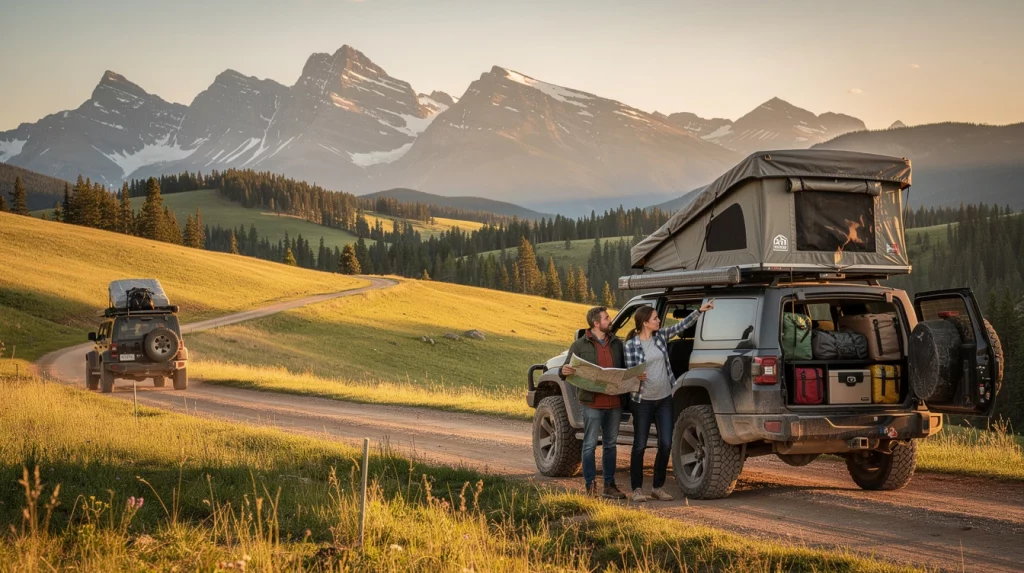
Overlanding is vehicle-based travel focused on the journey rather than the destination. You pack what you need, head into remote terrain, and live out of your rig for days, weeks, or longer. No hotel reservations. No crowded campgrounds. Just open roads, public land, and the freedom to stop wherever you want.
What started as a fringe hobby for hardcore off-road enthusiasts has quietly become one of the fastest-growing lifestyle movements in America. Here’s why.
The Shift That Changed Everything
The overlanding surge didn’t happen in isolation. A convergence of cultural and economic forces pushed millions of people toward vehicle-based travel at the same time.
Remote work removed the anchor of a fixed office. When your laptop goes with you, so can your truck. People who once counted vacation days started measuring time differently, and the open road became a legitimate option rather than a fantasy.
At the same time, public land access in the American West gave overlanders something Europe simply doesn’t have at the same scale: millions of acres of BLM land, forest roads, and dispersed camping where you can pull off and stay for free. Montana alone has over 30 million acres of public land. That’s not a backdrop. That’s the whole point.
The final piece was community. YouTube channels, Instagram builds, and overlanding forums created a visible culture around the lifestyle. When you can watch someone drive the length of Baja or the Haul Road in Alaska from your couch, the idea stops feeling impossible and starts feeling planned.
If your overland rig is going to cover serious ground, its registration needs to be in order before you leave the driveway. A more detailed breakdown is available in How to Register Vehicles in Montana for Business Clients. That guide covers what documentation you need and how the process works from start to finish.
Curious how Montana registration works for your overland build? Find your package.
The Vehicle Becomes the Base Camp
One of the most interesting things about overlanding is what it does to your relationship with your vehicle. It stops being transportation and becomes infrastructure. Your truck or SUV is your bedroom, kitchen, storage system, and communication hub all at once.
Ready to register your vehicle?
Join thousands of vehicle owners who use Montana Registration Services to handle their registration quickly.
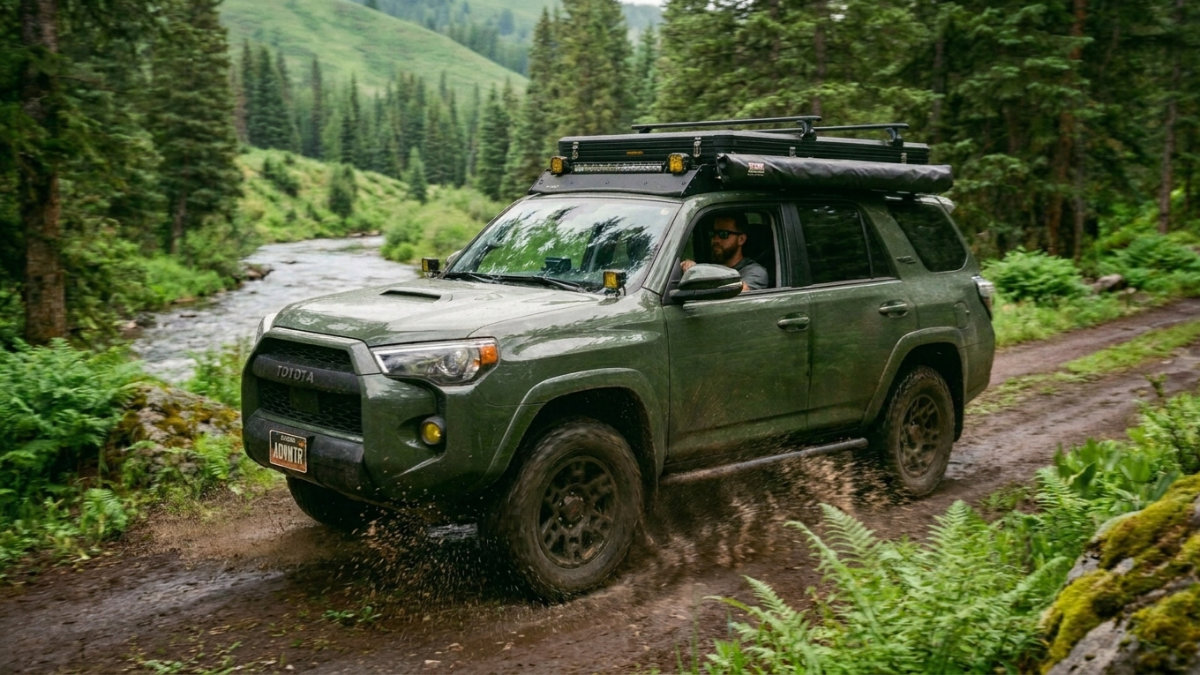
Find My Montana Package → →Modern builds reflect that. Rooftop tents fold out in under two minutes and sleep two adults comfortably. Portable lithium power stations run refrigerators, charge electronics, and power satellite communicators. Long-range fuel tanks extend range by 300 miles or more. Recovery gear, high-lift jacks, and traction boards turn a stock rig into something that can self-rescue from soft sand or mud without a tow truck.
None of this requires a full-size truck. Compact SUVs like the Toyota 4Runner, Ford Bronco, and Subaru Outback have massive overlanding communities built around them. Sprinter vans and truck campers serve a slightly different crowd but follow the same philosophy: decrease fixed costs, increase mobility.
The aftermarket industry that grew up around overlanding is now worth billions annually, and it shows no signs of flattening. When your vehicle is your home base, you invest in it differently.
Registering that investment correctly matters too. Many overland owners look at Vehicle LLC options through Montana to avoid sales tax on high-dollar builds, which can save thousands on a fully equipped rig.
Why Montana Keeps Coming Up in Overland Circles
Ask in any overlanding forum why certain builds carry Montana plates, and you’ll get a consistent answer: no sales tax, no emissions testing, and no inspections. For a $90,000 truck build, skipping sales tax in a high-rate state can save $7,000 to $9,000 upfront.
Montana’s registration structure through an LLC has been used for decades by RV owners, exotic car collectors, and now a growing number of overland enthusiasts. The vehicle is titled under a Montana LLC rather than in your home state, which means it’s treated as a business asset rather than a personal vehicle purchase subject to state sales tax.
It’s worth understanding the structure clearly before proceeding. The Vehicle LLC FAQs page covers the most common questions about how it works, what’s required, and what the ongoing responsibilities look like.
Montana Registration Services processes titles through the Montana Motor Vehicle Division and typically submits titles within eight days, compared to an industry average that often stretches to six weeks. For overlanders who want to hit the road on a timeline, that turnaround matters.
“We processed the LLC formation and title submission in the same week. The client had Montana plates on a $115,000 overland build before their first planned trip.”
– Montana Registration Services team
The Overland Lifestyle Meets Practical Ownership
There’s a side of overlanding that doesn’t show up in the scenic photography: the paperwork side. Buying a used overland rig with modifications, converting a cargo van, or purchasing a high-mileage expedition vehicle from out of state all come with title complexity that standard DMV counters handle slowly.
Lien releases on older vehicles, out-of-state title transfers, and registration renewals while traveling are real friction points. The Vehicle Registration Challenges: Resolving Missing Titles, Unsigned Transfers, and Complex Ownership Issues post covers exactly these scenarios and how they get resolved.
For overland travelers spending extended time in remote areas, Mail Forwarding and registered agent services also come into play when official documents need somewhere to land. Mail forwarding through MRS keeps your Montana address active and your documents accessible even when you’re weeks from cell service.
If you’re insuring a high-value build, getting coverage right before you leave is equally important. The Insuring Your Vehicle guide walks through what to consider when your vehicle doubles as your home base.
Overlanding Isn’t Slowing Down
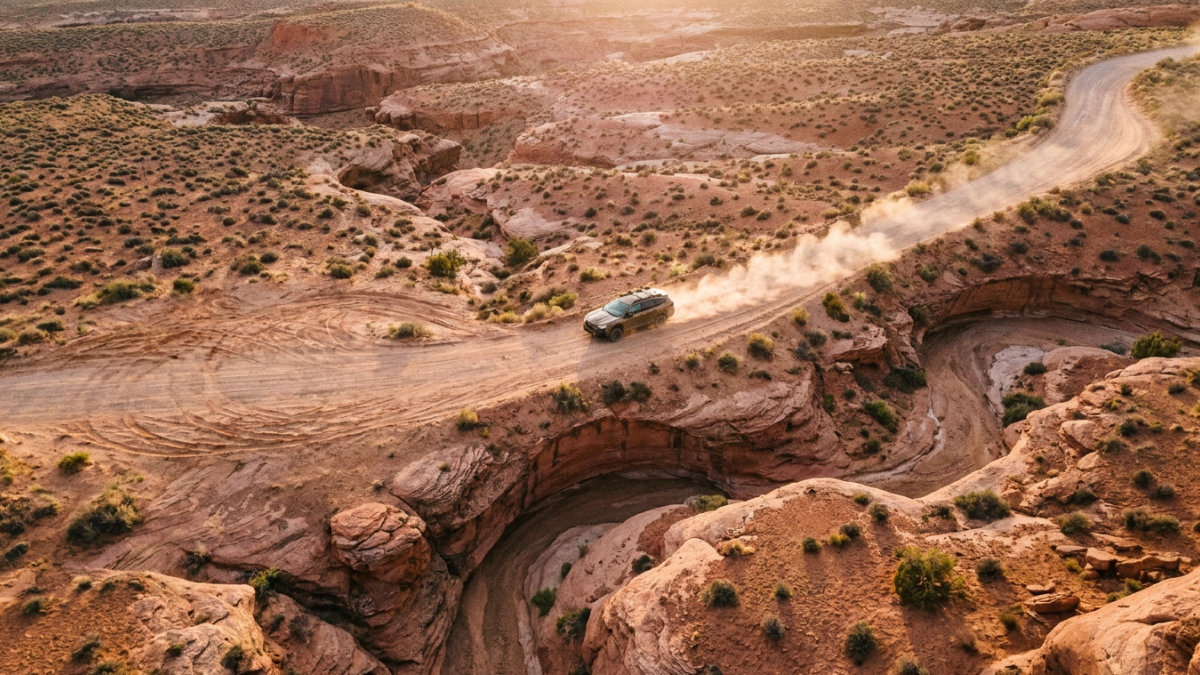
The numbers tell a clear story. Overlanding vehicle builds, trail maps, and gear sales have grown consistently since 2019. The community is younger, more diverse, and more connected than it was a decade ago. The conversation has moved from “can you do this?” to “which route are you running next?”
What that means practically is that more people are making serious financial commitments to their rigs. A well-equipped overland build is no longer a $15,000 project. Many are north of $60,000 to $100,000 when you factor in the base vehicle, suspension, recovery gear, communication systems, and sleeping setups. At that level, how you register and title it stops being a formality and starts being a financial decision.
Montana registration through an LLC is one of the most widely used structures in this space, and understanding it correctly from the beginning saves complications later. The Registering a Business or Vehicle Through a Montana LLC post gives a clear overview of the structure, the formation process, and what professional clients should understand before starting.
Frequently Asked Questions
What exactly is overlanding?
Overlanding is self-reliant vehicle-based travel where the journey is the focus rather than a fixed destination. Travelers carry food, water, shelter, and recovery gear in their vehicles and travel remote terrain for days or weeks at a time. It differs from traditional camping because the vehicle itself serves as the primary shelter and logistics platform.
Does Montana LLC registration work for any vehicle type?
Yes, in most cases. Montana LLC registration has been used for trucks, SUVs, RVs, motorcycles, trailers, and exotic vehicles. The structure works for any vehicle purchased and titled under the LLC. Montana has no sales tax on vehicle purchases, which is the primary financial benefit for high-value builds. See the Vehicle LLC FAQs for specifics.
How much can Montana registration actually save on an overland build?
Savings depend on your home state’s sales tax rate and the vehicle’s purchase price. On a $80,000 overland build in a state with an 8% sales tax, that’s $6,400 in tax avoided. Montana charges no sales tax on vehicle purchases. Annual registration fees through a Montana LLC are typically low, often under $300 per year depending on vehicle age and type.
What’s the process for getting Montana plates on an out-of-state vehicle?
The general steps are: form a Montana LLC, purchase the vehicle under the LLC’s name, and submit the title and registration application to the Montana Motor Vehicle Division. Montana Registration Services handles all three steps and typically submits titles within eight days. A full walkthrough is in the How to Register a Vehicle in Montana Without Being a Resident guide.
Can I register a modified or heavily built vehicle through Montana?
Montana does not require emissions testing or vehicle inspections for registration, which makes it a practical option for modified builds. There are no smog checks or safety inspections tied to the registration process. Title requirements still apply, so the vehicle needs a clear title or a bonded title process if the original title is missing or problematic.
Does it matter where I store or use the vehicle after registering in Montana?
Montana LLC registration is a legitimate business structure, and the vehicle is owned by the LLC. However, home state enforcement of use tax and registration requirements varies and is an active area of state-level scrutiny. Consulting a tax professional familiar with your home state’s rules is the responsible step before proceeding. MRS provides the registration service, not tax or legal advice.
Ready to register your overland build the right way? Find your Montana package.